
Wind Energy
Wind Power in Oulu
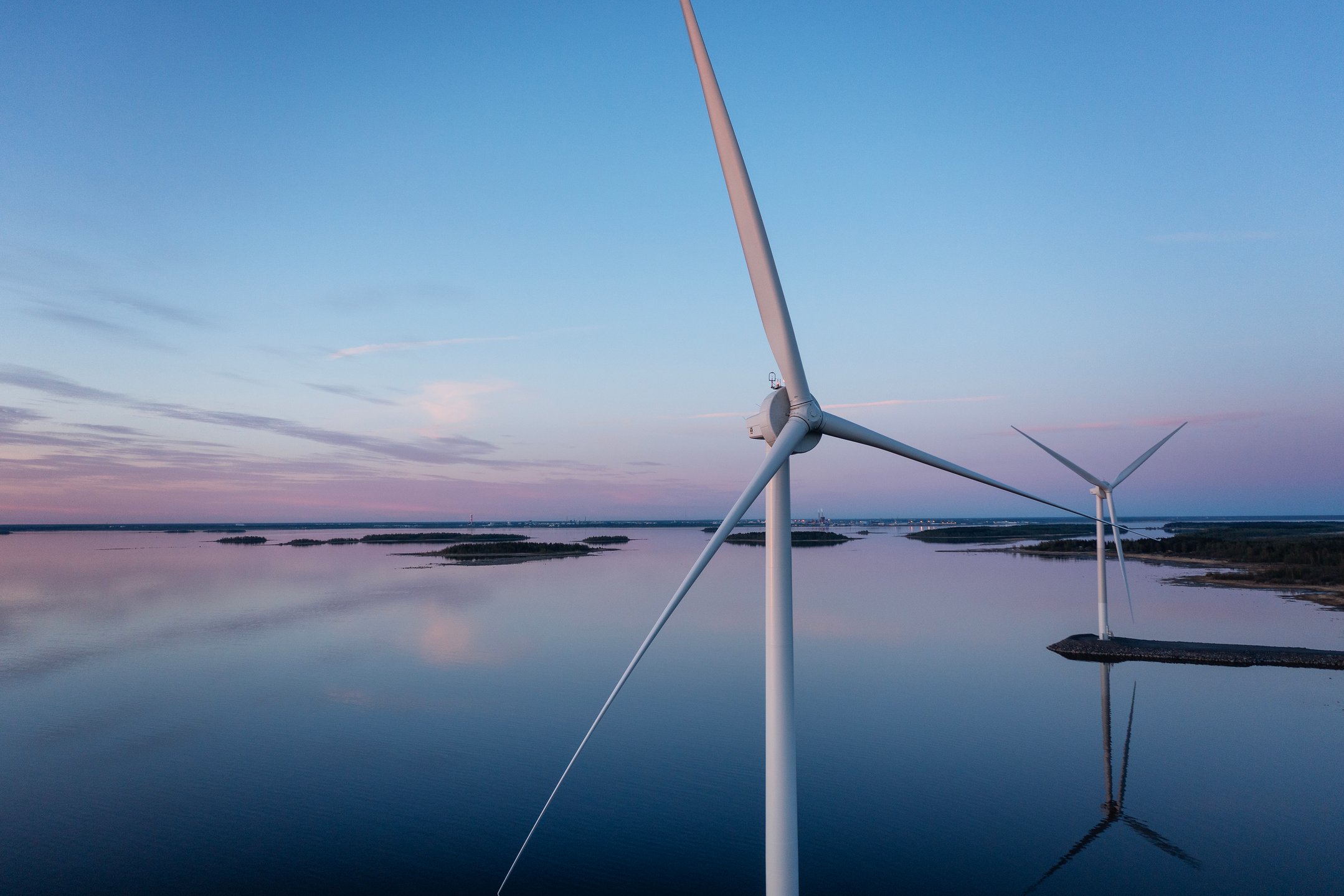
Oulu is located on Finland’s wind-rich western coast, offering excellent conditions for wind power generation. North Ostrobothnia is Finland’s leading wind energy region and accounts for approximately 40% of the country’s total wind power production. Strong and consistent coastal winds enable high generation efficiency, particularly during the winter season. Approximately 60% of annual wind power production is generated between October and March, coinciding with the period of highest electricity demand.
A key advantage of the Oulu region is its well-developed electricity transmission infrastructure. The area is connected to Finland’s national transmission grid through several major transmission corridors operated by Fingrid, enabling the integration of large-scale renewable energy projects and energy-intensive industrial investments. Local electricity distribution is managed by Oulu Energia.
The region’s long-term growth potential is further strengthened by major offshore wind developments planned along the coast of Northern Finland. Several offshore projects are being developed in the sea areas of Raahe, Siikajoki, Hailuoto and Oulu. Together, these projects are expected to provide approximately 12 TWh of annual electricity generation, representing a significant increase in the supply of renewable energy available to industry and future investments. Planned grid connection points are located at the substations of Raahe, Siikajoki and Pikkarala.
Finland’s wind energy sector operates on a market-based basis without production subsidies. In addition, the country has a substantial pipeline of permitted wind power capacity ready for implementation as electricity demand increases through industrial projects, data centres, electrification and hydrogen economy investments.
Key Facts
• Excellent coastal wind conditions
• Approximately 40% of Finland’s wind power is generated in North Ostrobothnia
• Peak production occurs during the winter season (October-March)
• Strong connectivity to Finland’s national transmission grid operated by Fingrid
• Offshore wind pipeline with an estimated annual generation potential of approximately 12 TWh
• Market-driven wind power development without production subsidies
• Significant amount of permitted wind power capacity awaiting new electricity-consuming investments
Wind power has become one of the key drivers of Finland’s energy transition, industrial competitiveness and investment attractiveness. The availability of affordable, emission-free electricity is increasingly a deciding factor for companies planning new production facilities, data centres, hydrogen projects and other energy-intensive operations.
Finland offers excellent conditions for wind power development. Most new wind farms are built on market terms without production subsidies, demonstrating the sector’s competitiveness and long-term viability. As wind generation continues to expand, it strengthens national energy self-sufficiency while increasing the supply of renewable electricity available for industrial growth.
For businesses, wind power creates value far beyond electricity generation. A growing renewable energy sector supports investment across the entire value chain, including project development, engineering, construction, maintenance, digital services, energy storage and grid infrastructure. Hybrid energy projects combining wind power, solar generation and battery storage are further enhancing the flexibility and reliability of energy systems.
The availability of renewable electricity is also essential for achieving climate targets. Electrification is widely recognised as the most cost-effective pathway for reducing industrial emissions, and wind power plays a central role in enabling low-carbon manufacturing and services. Companies locating in regions with strong renewable energy resources can significantly reduce their operational carbon footprint while supporting their sustainability commitments.
Wind power projects generate substantial regional economic benefits through investments, supply-chain demand, employment and tax revenues. Long operational lifetimes ensure that these benefits continue for decades after construction.
Oulu aims to become carbon neutral by 2030 and is actively supporting the transition towards a clean energy economy. Together with strong grid connections, growing renewable power generation and a robust industrial base, the region offers an attractive environment for companies seeking sustainable growth opportunities in Northern Europe.
Key Benefits for Investors
- Access to competitively priced renewable electricity
- Strong support for industrial electrification and hydrogen economy projects
- Market-driven development without production subsidies
- Long-term investment stability and predictable energy supply
- Opportunities across the wind energy value chain
- Potential for hybrid energy projects combining wind, solar and storage
- Contribution to corporate decarbonisation and ESG targets
- Strong regional commitment to carbon neutrality and clean growth
“Northern Ostrobothnia is Finland’s leading wind power region, combining extensive project development activity, strong grid infrastructure and significant opportunities for future industrial growth.”
The Oulu region is one of Finland’s most active areas for wind power development. A large number of projects are currently in operation, under development, or advancing through permitting and planning processes, demonstrating strong long-term confidence in the region’s renewable energy potential.
The municipality currently has:
- 9 active wind power projects
- 8 projects under development
- 1 project with an approved zoning plan
- Potential for up to 139 wind turbines
A continuously updated map of wind power projects and operating wind farms in Finland is available from: Finnish Renewables (Suomen uusiutuvat)
The wider Northern Ostrobothnia region hosts dozens of onshore and offshore wind projects at various stages of development. Together, these projects represent a substantial pipeline of future renewable electricity generation that can support industrial growth, electrification, hydrogen projects and other energy-intensive investments.
Key Development Areas
- Oulu
- Mustasuo
- Navettakangas
- Liipas
- Kotaselkä
- Koutuanjärvi
- Latvaselkä
- Iso-Rytisuo
- Sarviselkä
- Iso Pihlajasuo
- Ii
- Talvisuo
- Yli-Olhava
- Utajärvi
- Ahmas
- Hietaselkä
- Maaselkä
- Tornikangas
- Pontema
- Pahkavaara
- Pudasjärvi
- Joutensuo
- Tolpanvaara Extension
- Kääpäsuo
- Kaartosuo
- Puka-aho / Pukasuo
- Kinttaisviita
- Kuikkasuo
- Vaala
- Susisuo
- Haarasuonkangas
- Turkkiselkä
- Liminka
- Jauranneva
Offshore Projects
- Seljänsuunmatala East, Siikajoki
- Seljänsuunmatala West, Siikajoki
- Halla Offshore Wind Project
- Existing Wind Farms
The region already hosts numerous operational wind farms, providing a proven track record for large-scale wind power development and grid integration. Examples include:
- Vihreäsaari (Oulu)
- Riutunkari (Oulu)
- Huikku (Hailuoto)
- Lumituuli (Ii)
- Pahkakoski (Ii)
- Olhava (Ii)
- Nyby (Ii)
- Myllykangas (Ii)
- Vatunki (Ii)
- Sähkäle (Lumijoki)
- Varessäikkä (Siikajoki)
- Vartinoja (Siikajoki)
- Isoneva (Siikajoki)
Developing a wind power project is a long-term process that requires thorough planning, environmental assessment and collaboration with local stakeholders. In Finland, wind power projects follow a structured and predictable development process that helps ensure environmental, social and technical considerations are addressed from the earliest planning stages.
The development and permitting phase typically takes 3–6 years and includes site selection, environmental impact assessment (EIA), land-use planning, grid connection studies and permit applications. During this phase, developers evaluate wind resources, technical feasibility and potential environmental impacts.
Construction usually takes 1–2 years and includes civil works, foundations, roads, electrical infrastructure and turbine installation. Once completed, wind farms enter commercial operation.
Wind turbines generally have an operational lifetime of 25–30 years, during which regular maintenance and performance optimisation ensure reliable electricity generation. At the end of their service life, turbines can be repowered with newer technology or decommissioned and dismantled.
Overall, a typical wind power project has a lifecycle of approximately 30–35 years.
Environmental Assessment and Responsible Development
Environmental considerations play a central role throughout project development. Environmental impact assessments typically include studies on bird migration, wildlife, habitats, landscape impacts and cultural heritage sites.
Careful project design and site selection help minimise impacts on biodiversity and other land uses. In recent years, increasing attention has been paid to ecosystem protection, habitat connectivity and measures that support biodiversity alongside renewable energy development.
For projects developed on state-owned land, developers are also expected to present plans for promoting biodiversity and supporting sustainable land use throughout the project lifecycle.
Typical Wind Power Project Timeline
• Site Identification and Feasibility Assessment
• Environmental Impact Assessment (EIA)
• Land-Use Planning and Permitting
• Grid Connection Planning
• Financing and Final Investment Decision
• Construction (1–2 years)
• Operations and Maintenance (25–30 years)
• Repowering or Decommissioning
• Why This Matters for Investors
• Transparent and well-established permitting processes
• Predictable project development timelines
• Strong environmental and regulatory standards
• Long operational lifetimes supporting stable returns
• Opportunities across development, construction, operations and maintenance
• Potential for technology upgrades and repowering at the end of the asset lifecycle
The Gulf of Bothnia is expected to become one of Finland’s most important offshore wind development areas in the coming decades. Strong wind conditions, extensive sea areas and growing demand for renewable electricity are creating significant opportunities for large-scale offshore wind investments.
For energy-intensive industries, offshore wind offers the potential for substantial increases in renewable electricity generation, strengthening both regional energy security and Finland’s long-term competitiveness as a location for industrial investment.
Several offshore wind projects are currently being developed along the western coast of Finland. Among the most significant is the Halla Offshore Wind Project, located in Finland’s exclusive economic zone off the coast of Oulu and Raahe.
The project is planned to include up to 160 wind turbines with an estimated annual electricity generation of approximately 12 TWh. This corresponds to more than 15% of Finland’s total electricity production in 2023 and would represent one of the largest renewable energy projects in the Nordic region.
The expansion of offshore wind is expected to create opportunities throughout the value chain, including project development, marine construction, port operations, grid infrastructure, maintenance services and emerging hydrogen economy projects.
At the same time, offshore development requires careful coordination with other sea-based activities, including commercial shipping, fishing operations and submarine cable infrastructure. Finland’s planning and permitting processes are designed to balance these different interests while enabling responsible renewable energy development.
Oulu’s Strategic Approach
The City of Oulu has established strategic guidelines for large-scale wind power development to support sustainable growth and long-term investment planning. These guidelines provide a framework for developing wind power projects while considering environmental, societal and business-related objectives.
Combined with onshore wind developments, offshore wind projects in the Gulf of Bothnia are positioning the Oulu region as one of Northern Europe’s most attractive locations for renewable-energy-powered industrial investments.
Combined with onshore wind developments, offshore wind projects in the Gulf of Bothnia are positioning the Oulu region as one of Northern Europe’s most attractive locations for renewable-energy-powered industrial investments.
Environmental responsibility and stakeholder engagement are integral parts of wind power development in Finland. Wind energy projects undergo comprehensive environmental assessments and permitting processes to ensure that potential impacts are identified and mitigated throughout the project lifecycle.
Wind turbines must comply with Finland’s national noise regulations. The Government Decree on wind turbine noise establishes guideline values designed to ensure that wind farms are located at sufficient distances from residential areas and do not adversely affect living conditions or environmental amenity. Careful planning, modern turbine technology and site selection help minimise noise-related impacts.
The most significant local environmental impacts are typically associated with construction activities. These may include land use changes, habitat fragmentation, temporary construction noise and the development of roads, foundations, crane areas and underground cable connections. As a result, environmental impacts are assessed extensively during project planning and permitting.
Particular attention is paid to biodiversity and wildlife. Environmental impact assessments commonly include studies of bird migration routes, breeding areas, habitats and other ecological values. Potential impacts can often be reduced through appropriate site selection, project design and operational measures such as temporary turbine shutdowns during sensitive migration periods when necessary.
Offshore Wind Considerations
Offshore wind projects involve many of the same environmental assessment principles as other marine infrastructure developments. Potential impacts include temporary seabed disturbance during construction, underwater noise and changes to local marine conditions.
At the same time, offshore wind foundations may create new habitats for marine species. In some locations, turbine foundations can function as artificial reefs that support biodiversity by providing surfaces for shellfish and other marine organisms.
Long-Term Sustainability and Community Engagement
Environmental impact assessments (EIA) and permitting procedures evaluate not only individual projects but also the cumulative effects of multiple developments within the same region. This approach helps ensure that renewable energy expansion is balanced with environmental protection and other land and sea uses.
Successful wind power development also depends on transparent stakeholder engagement and community dialogue. Early cooperation between developers, municipalities, landowners, residents and other stakeholders helps strengthen social acceptance and supports long-term project success.
Oulu offers not only excellent wind resources but also a complete business ecosystem supporting the development, construction and operation of wind power projects.
The Oulu region hosts a growing wind energy ecosystem that supports all phases of wind power development, from project planning and engineering to construction, logistics, operations and maintenance.
The region is home to a wide range of companies active in renewable energy project development, engineering services, construction, infrastructure, grid solutions and technical consulting. International and Finnish wind power developers operate alongside a strong network of local contractors and service providers, creating an established environment for renewable energy investments.
A Complete Wind Power Value Chain
The regional ecosystem includes expertise in:
- Project development and permitting
- Environmental studies and impact assessments
- Engineering and technical design
- Civil construction and infrastructure
- Electrical grid connections
- Heavy transport and logistics
- Port operations
- Wind turbine installation
- Operations and maintenance services
- Inspection, certification and compliance services
Logistics and Infrastructure
Efficient logistics are essential for wind power development. The transportation of turbine components requires specialised route planning, transport permits and heavy-lift expertise.
The Port of Oulu’s Oritkari harbour plays an important role in handling large industrial cargo and wind turbine components. The region also benefits from specialised logistics providers experienced in transporting oversized wind energy equipment throughout Northern Finland.
Wind power logistics typically involve:
- Route surveys and transport planning
- Permit applications for special transports
- Port handling and cargo operations
- Road transport of turbine components
- Heavy lifting and installation works
- Site commissioning and testing
- Operations and Maintenance
Wind farms require long-term operations and maintenance services throughout their 25–30 year operating life.
Maintenance may be performed by the turbine manufacturer, independent service providers or the asset owner’s own organisation. Service agreements are commonly established when turbines are purchased and typically cover the first 5–12 years of operation. After the warranty period, operators may continue with manufacturer support or transition to independent maintenance providers.
This creates long-term business opportunities in technical services, inspections, digital monitoring, predictive maintenance and specialised field operations.
Oulu combines strong renewable energy resources with internationally recognised research and development capabilities. The region’s universities, research institutes and industry partners are actively involved in developing technologies that support the future growth of wind power and the wider energy transition.
The University of Oulu conducts research across several fields relevant to wind energy, including energy systems, digitalisation, weather forecasting and environmental impacts. For example, the CoPower project has contributed to the development of advanced energy weather forecasting solutions that help improve renewable energy production planning and grid operations.
Research and innovation activities in the region also focus on:
- Smart electricity systems and grid integration
- Energy forecasting and digital optimisation
- Wind power and hydrogen production
- Turbine technology and efficiency improvements
- Biodiversity and environmental impact assessment
- Circular economy solutions for wind turbine components
- Offshore wind development in northern conditions
VTT Technical Research Centre of Finland contributes expertise in renewable energy, Arctic conditions, icing phenomena, radar impact assessments and technology development for future energy systems.
Emerging Innovation Areas
The rapid growth of renewable energy is creating new opportunities for research, pilot projects and commercial innovation.
Particular areas of interest include:
- Integration of wind power and green hydrogen production
- Energy storage and hybrid energy systems
- Participation of wind power in electricity reserve markets
- Digital monitoring and predictive maintenance
- Recycling and circular economy solutions for turbine materials
- Offshore wind technologies for Nordic conditions
As the first large-scale wind turbines begin reaching the end of their operational lifetimes in the coming decades, increasing attention is being given to turbine repowering, component reuse and recycling technologies.
Research Supporting Future Energy Systems
Research organisations across Finland are studying how the continued expansion of wind power can contribute to more efficient electricity markets and a more resilient energy system. Increased geographical distribution of wind power generation can help balance production patterns and strengthen long-term energy security.
Finland’s low population density and extensive land and sea areas also provide favourable conditions for developing both onshore and offshore wind energy while balancing environmental and societal considerations.
Collaboration and Industry Engagement
The region supports active collaboration between research organisations, energy companies, technology providers and public sector stakeholders. This enables the testing and deployment of new solutions in real-world operating environments.
For companies investing in renewable energy, Oulu offers opportunities to collaborate with leading research institutions, access highly skilled talent and participate in innovation projects that support commercial growth and technology development.
Events and Knowledge Sharing
Oulu hosts events and networking opportunities focused on renewable energy, clean technologies and industrial transformation. These activities help connect companies, researchers, investors and public-sector stakeholders.
Examples include:
- Wind Oulu 2027
- Renewable energy seminars and workshops organised by BusinessOulu and regional partners
- Industry-specific conferences, innovation projects and stakeholder forums
JANNE Hietaniemi
Key Account Director, Cleantech and Industry
janne.hietaniemi@businessoulu.com
+358 40 649 1211
Päivi Lehto
Coordinator, Cleantech and Sustainable Industry
paivi.lehto@businessoulu.com
+358 40 759 5093
About us
We are here to help you
We are representatives for the whole Oulu region eager to help your business succeed. We can guide you to the right address, whether in the Oulu region or elsewhere in the North. We help hydrogen industry professionals start and grow their businesses. Our collaborative approach enables us to provide comprehensive support tailored to your needs.
Here are six examples of how we can help you at different stages of the investment lifecycle:
- We can first familiarise you with the opportunities the region presents. We provide information to support investment decisions and guide our partners when they visit the region and acquaint them with the area’s various stakeholders.
- We can introduce you to regional, Finnish and EU funding opportunities for your project.
- When you need to choose the exact location for your plant, we can help you with land-use planning and zoning.
- We can work with you to identify and plan the infrastructure needed for your plant and connect you with infrastructure builders.
- When you are looking for suppliers and customers in our region, we can help you establish contacts in our hydrogen industry ecosystem.
- When you are looking for world-class expertise, we can introduce you to cutting-edge hydrogen researchers in the Oulu region.
Contact us:
JANNE Hietaniemi
Key Account Director, Cleantech and Industry
janne.hietaniemi@businessoulu.com
+358 40 649 1211

Päivi Lehto
Coordinator, Cleantech and Sustainable Industry
paivi.lehto@businessoulu.com
+358 40 759 5093
For more information about Oulu as a city to live and work in, please visit oulu.com
For more information about Oulu as a place worth visiting, please click Visit Oulu
Is there something you’re wondering about? We’re happy to help!
If you are looking for partners in the cleantech sector, you have come to the right place.
CleantechOulu’s members work in many different roles in cleantech value chains, the common goal of which is to reduce adverse effects on the environment from small startups to bigger industrial players in the field.